Posts

Showing posts with the label ords

Building an Oracle 11G XE Server with APEX 5, ORDS and SQLcl in 30 minutes
Image
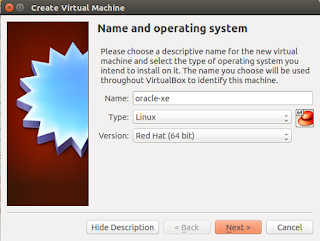
Pre-requisites 1. You have VirtualBox installed 2. You have the necessary Oracle installation files (oracle-xe, apex5, ords3 and sqlcl) Oracle XE - download from:  http://www.oracle.com/technetwork/database/database-technologies/express-edition/downloads/index.html Apex 5 - download from:  http://www.oracle.com/technetwork/developer-tools/apex/downloads/index.html ORDS 3 - download from: http://www.oracle.com/technetwork/developer-tools/rest-data-services/downloads/index.html SQLcl - download from:  http://www.oracle.com/technetwork/developer-tools/sql-developer/downloads/index.html 3. You have the installation image for CentOS - I just grabbed the Minimal image from a local mirror -  http://centos.mirror.digitalpacific.com.au/7/isos/x86_64/ Set up the virtual machine Give the Virtual machine an appropriate name, and since CentOS is based off Red Hat, specify the type as Red Hat (64-bit). Allocate 1GB RAM Create a new virtual hard drive...

Building ORDS plugins

Image
Oracle Request Data Services (ORDS) released version 3 recently. If you didn't notice, this version allows you to develop plugins (with Java) that can be imported into your ORDS instance, and provide extended functionality. You want to refer to the Oracle REST Data Services Plugin API, located here:  http://download.oracle.com/otndocs/java/javadocs/3.0/plugin-api/index.html , which itself includes a couple of nice documents: Getting started guide Developer guide This post just re-iterates a lot of what has already been covered in the getting started guide, with a focus on using IntelliJ IDEA. Setting the project up in IntelliJ IDEA So the first step is to set up a new project. First however, you will want to verify what version of Java you are using on your server (assuming you are developing on a separate workstation). This can be verified with the command java -version. [user@host ~]# java -version java version "1.7.0_79" OpenJDK Runtime Environment (rh...

Exposing procedures for URL access with ORDS

Image
I had just been looking at exposing some procedure for URL access, using ORDS. ORDS offers the following configuration properties: security.inclusionList security.exclusionList security.disableDefaultExclusionList security.validationFunctionType security.requestValidationFunction Which you can see on the docs: https://docs.oracle.com/cd/E37099_01/doc.20/e25066/config_file.htm#AELIG7204   If you look at the administrator guide:  https://docs.oracle.com/cd/E37097_01/doc.42/e35129/adm_mg_service_set.htm#AEADM209 it suggests pointing the validation function to: wwv_flow_epg_include_modules.authorize, and modifying the function: wwv_flow_epg_include_mod_local, within the APEX schema to return true or false depending if you want your procedure to be accessible or not. This unwrapped function is effectively called at the end of wwv_flow_epg_include_modules.authorize if none of the apex procedures matched. If you leave the value of security.requestVal...